
All buildings age. Not all buildings age well. How can we design buildings to age with grace?

A proposal for affordable housing in New York City
A lasting building needs to withstand the elements and adapt to shifting user needs. Buildings which fail to do so increase the cost of housing while contributing to instability for low-income renters.
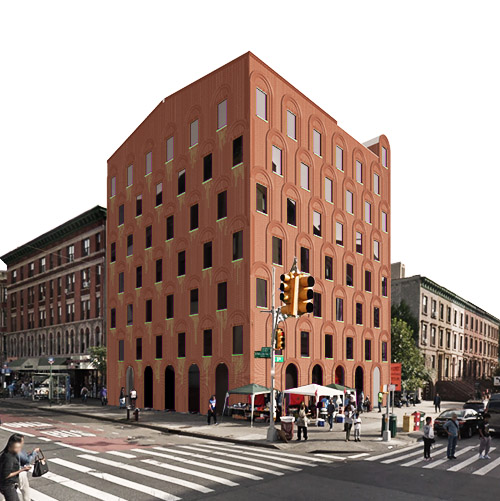
This competition entry proposes a model for affordable housing in NYC which becomes more valuable as it ages, in the same way patina that adds to the character of weathered surfaces.

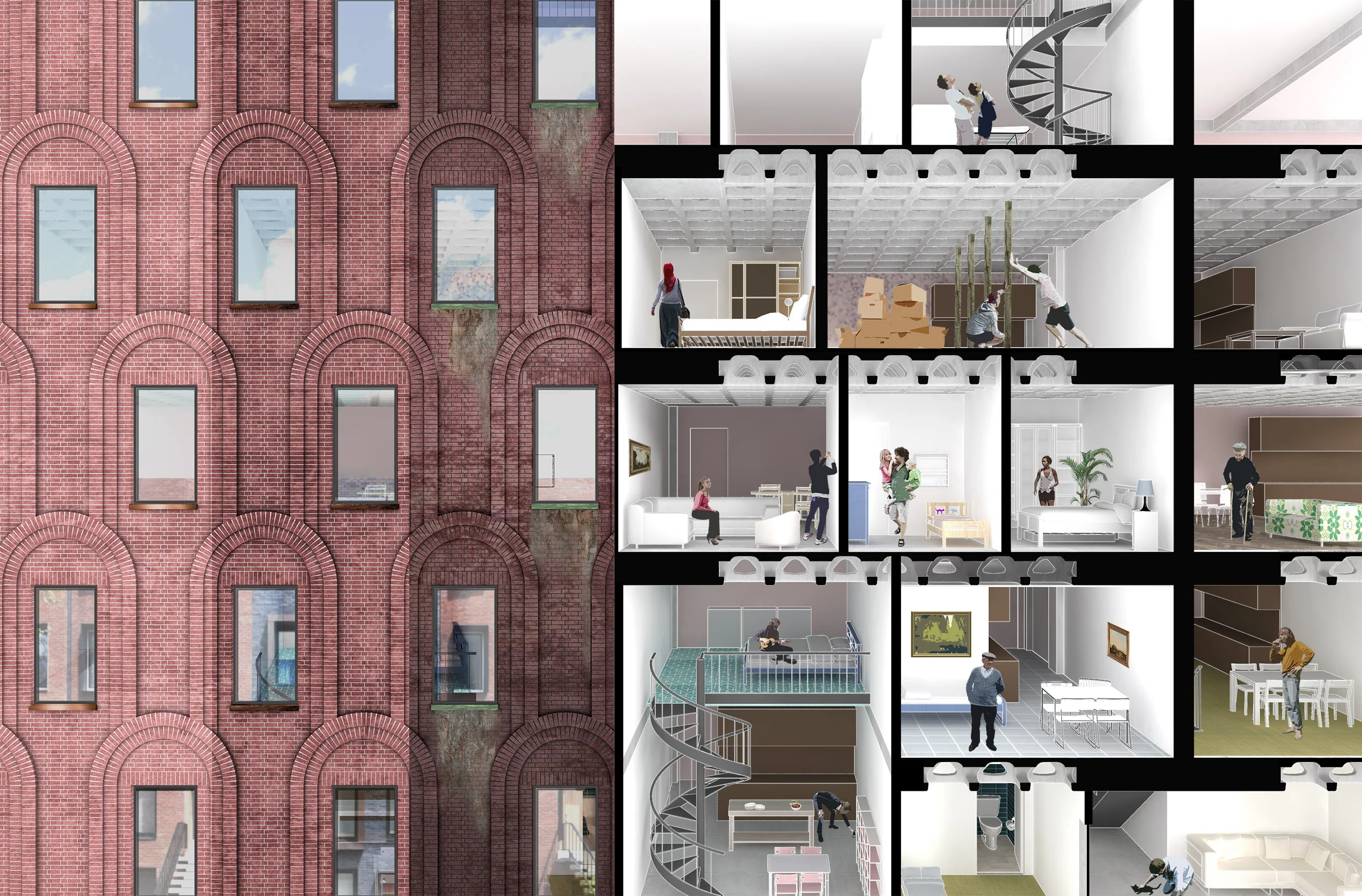
Brick and copper are used for their durability and because they acquire character, or patina, as they age, therefore reducing maintenance requirements for the building.
A rent-to-own scheme and easily remodeled spaces gives tenants control over their housing and encourages investment.
An innovative open-web waffle slab allows for maximum flexibility when routing mechanical, electrical, and plumbing services.
Collaboration with trade schools provides the expertise required to design and build partitions while offering an educational opportunity for students.
Ground floor communal areas can be used as workshop and studio space for students.
The initial development provides the most difficult aspects of new construction:
Bathroom / kitchen plumbing and fixtures
MEP services and shafts
Flexible, open structure
Emergency egress corridors
Exterior Envelope
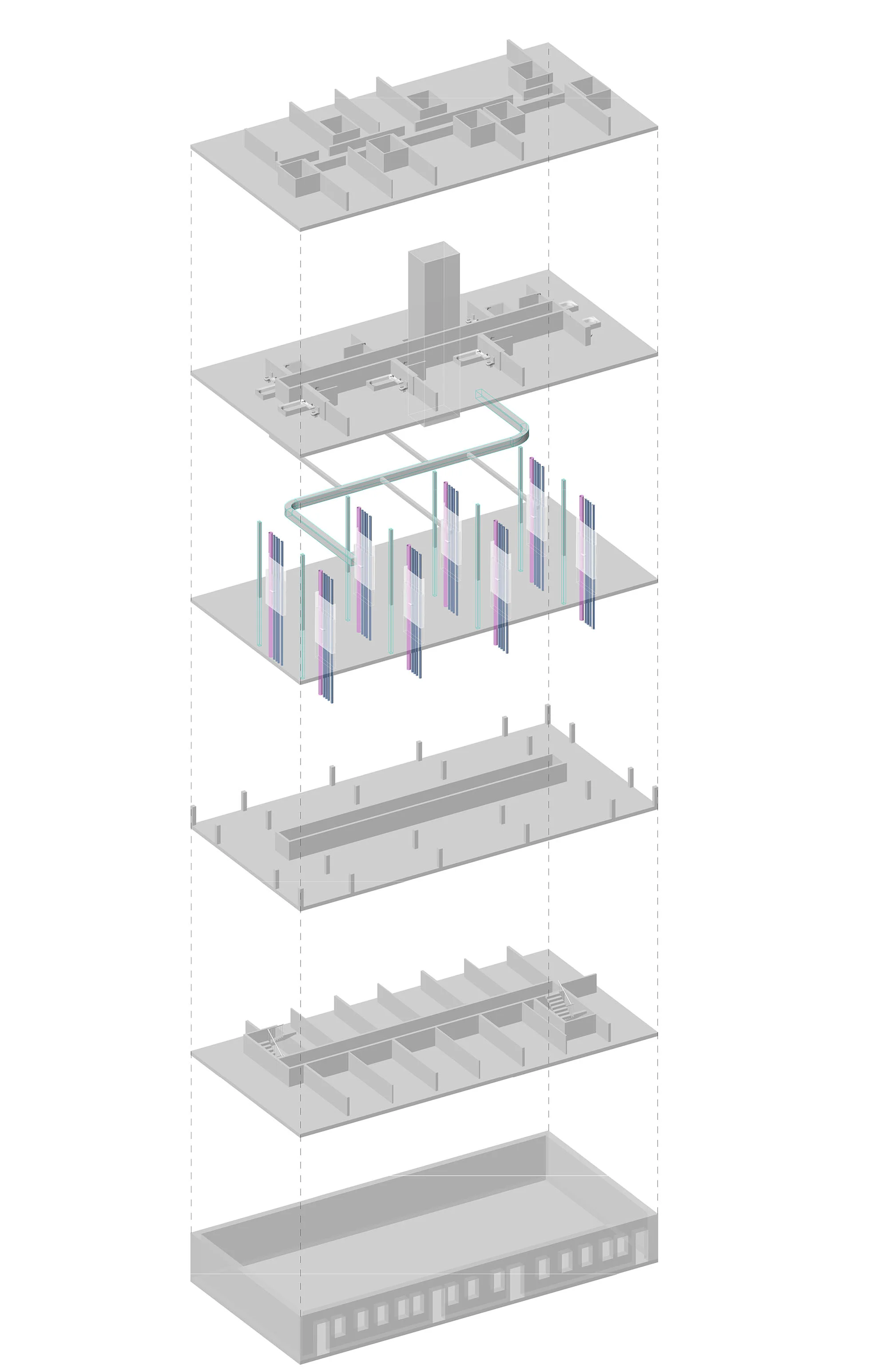
And users make updates to finishes and partitions as time, finances, and needs permit.
Rent and fees are proportional to size to allow for expansion, simplify downsizing, and to facilitate aging in place.

Year 0:
4 Small Units, 4 Medium Units
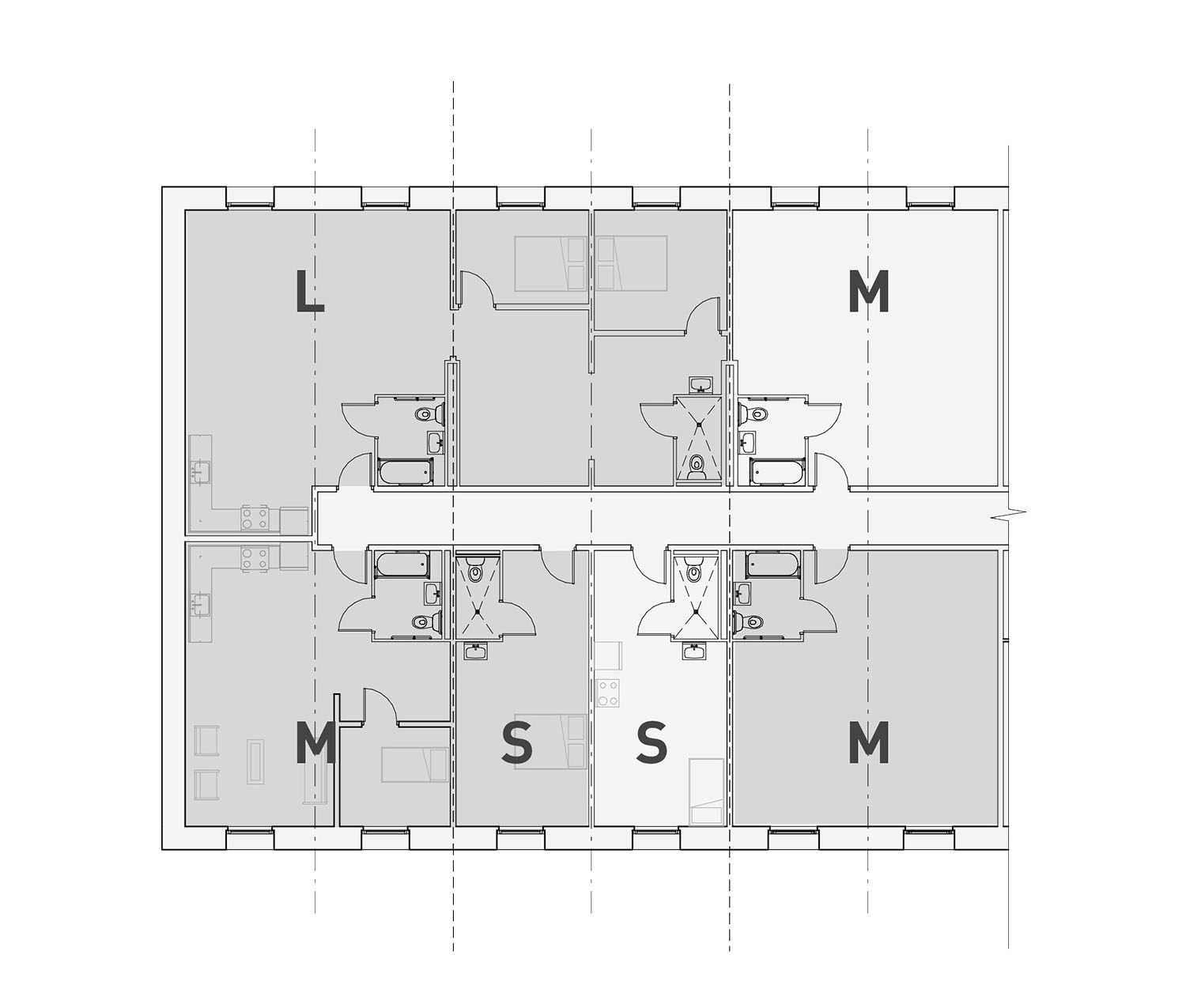
Year 5
2 Small Units, 3 Medium Units, 1 Large Unit

Year 25
3 Small Units, 3 Medium Units, 1 Large Unit
Case study
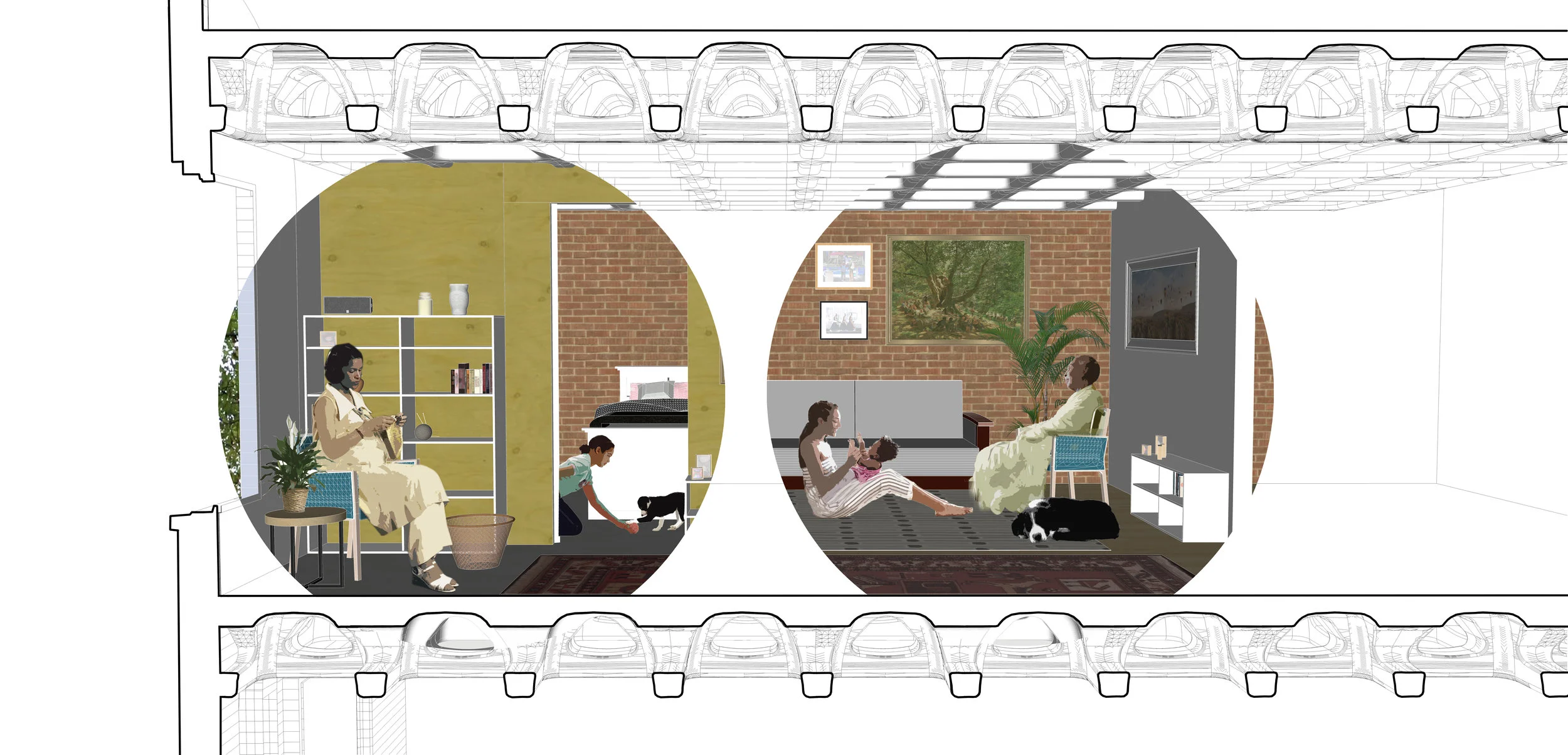
A family of three qualifies for a rent-to-own loft unit. With the comfort of knowing they will eventually own the unit, they invest time and effort into customizing the layout.

Year 5
Initially, the family creates an efficient 2 bedroom unit. Small personal touches, such as a rounded corner to the bedroom, are added over time.

Year 20
In the years after their daughter moves out, the owner removes two partitions to convert the space into a 1 bedroom unit.
How can a forest become a sanctuary for families experiencing homelessness?


SANCTUARY FOR AUSTIN FAMILIES
The city of Austin, Texas, struggles with a growing population of families experiencing homelessness. Working closely with a psychiatrist, an architecture firm known for their work in shelter design, and interviews with social case workers, this academic studio developed a model for a decentralized shelter system, with small sites throughout the city. We presented our findings to the Austin City Council.
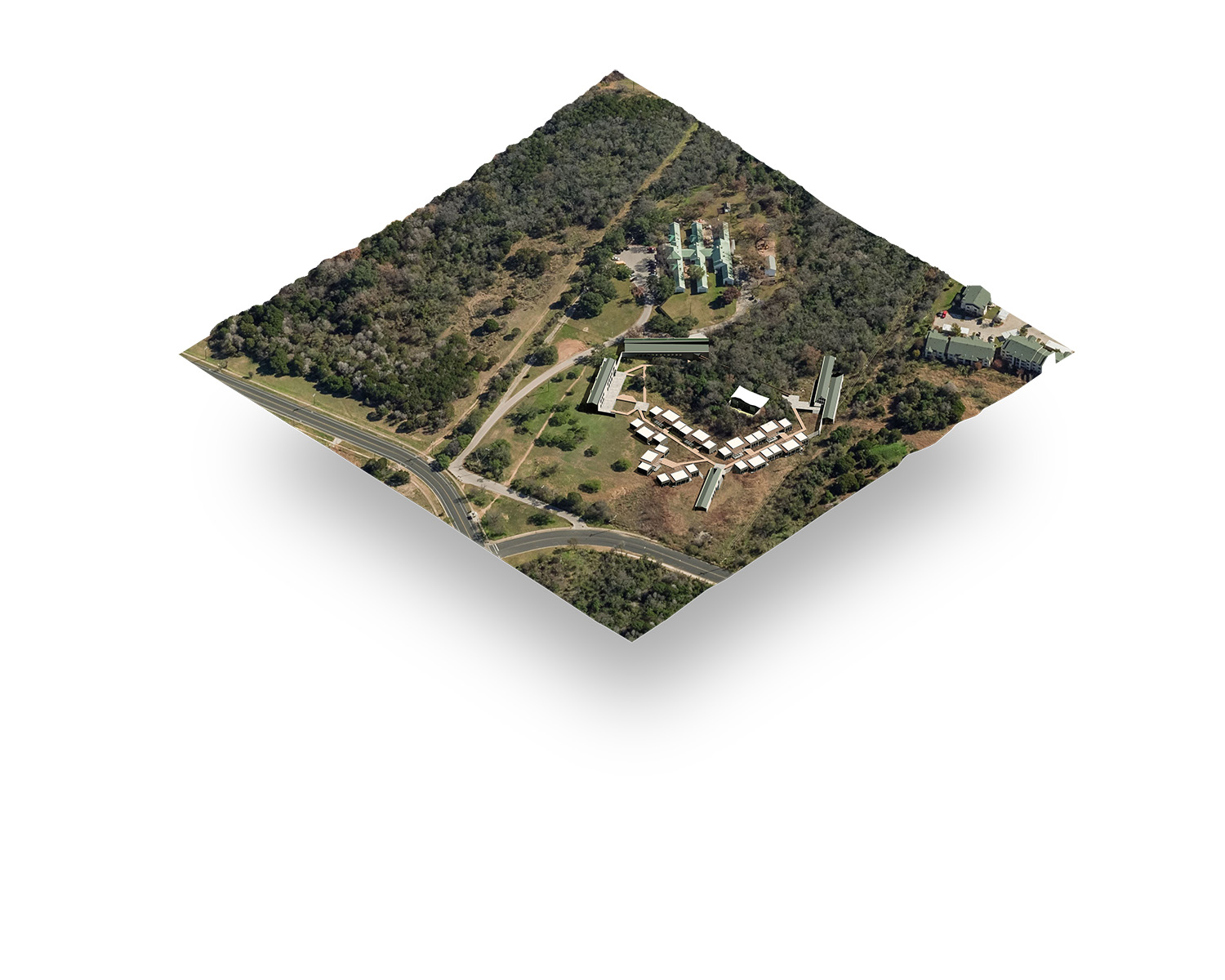
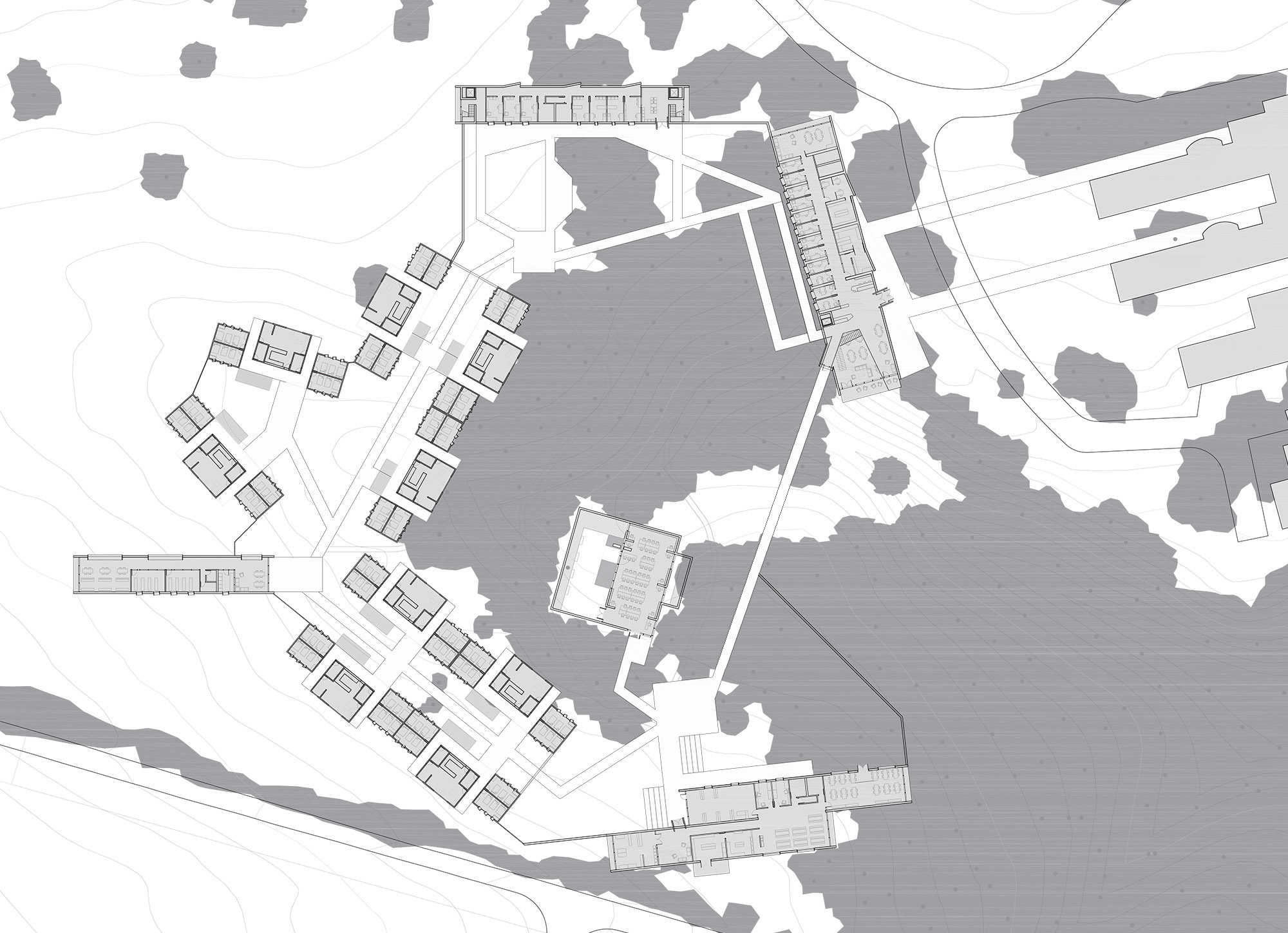
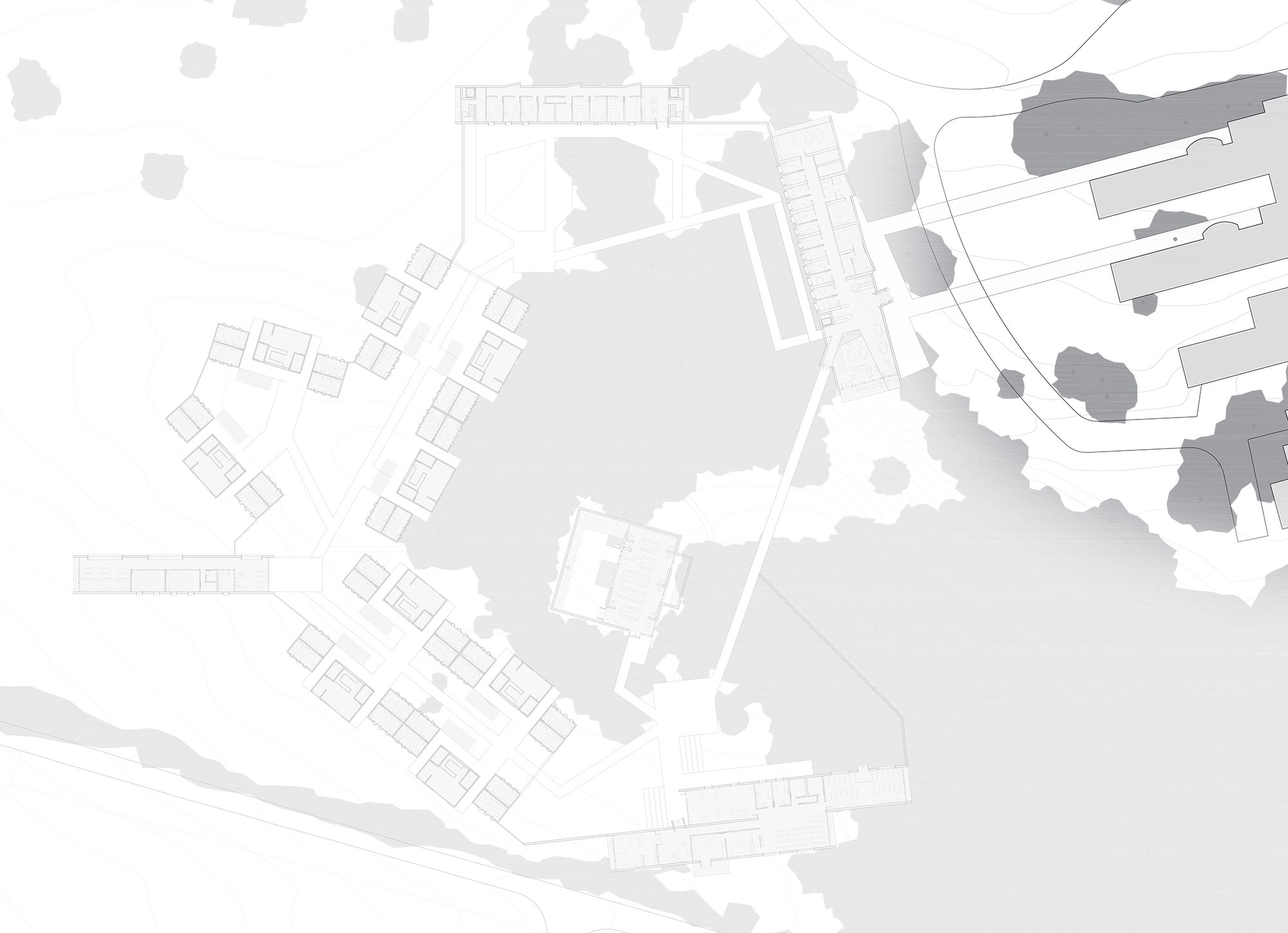
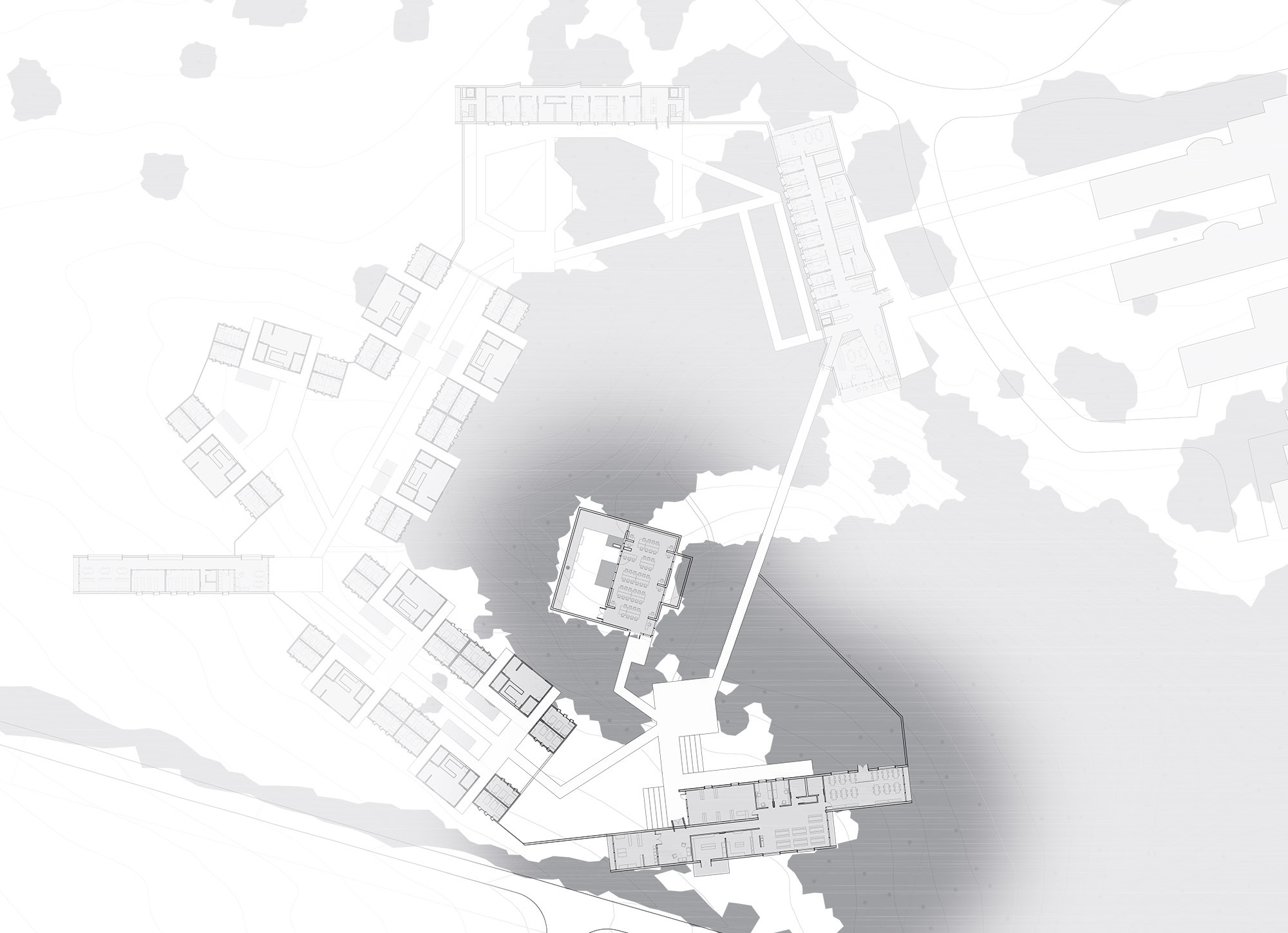
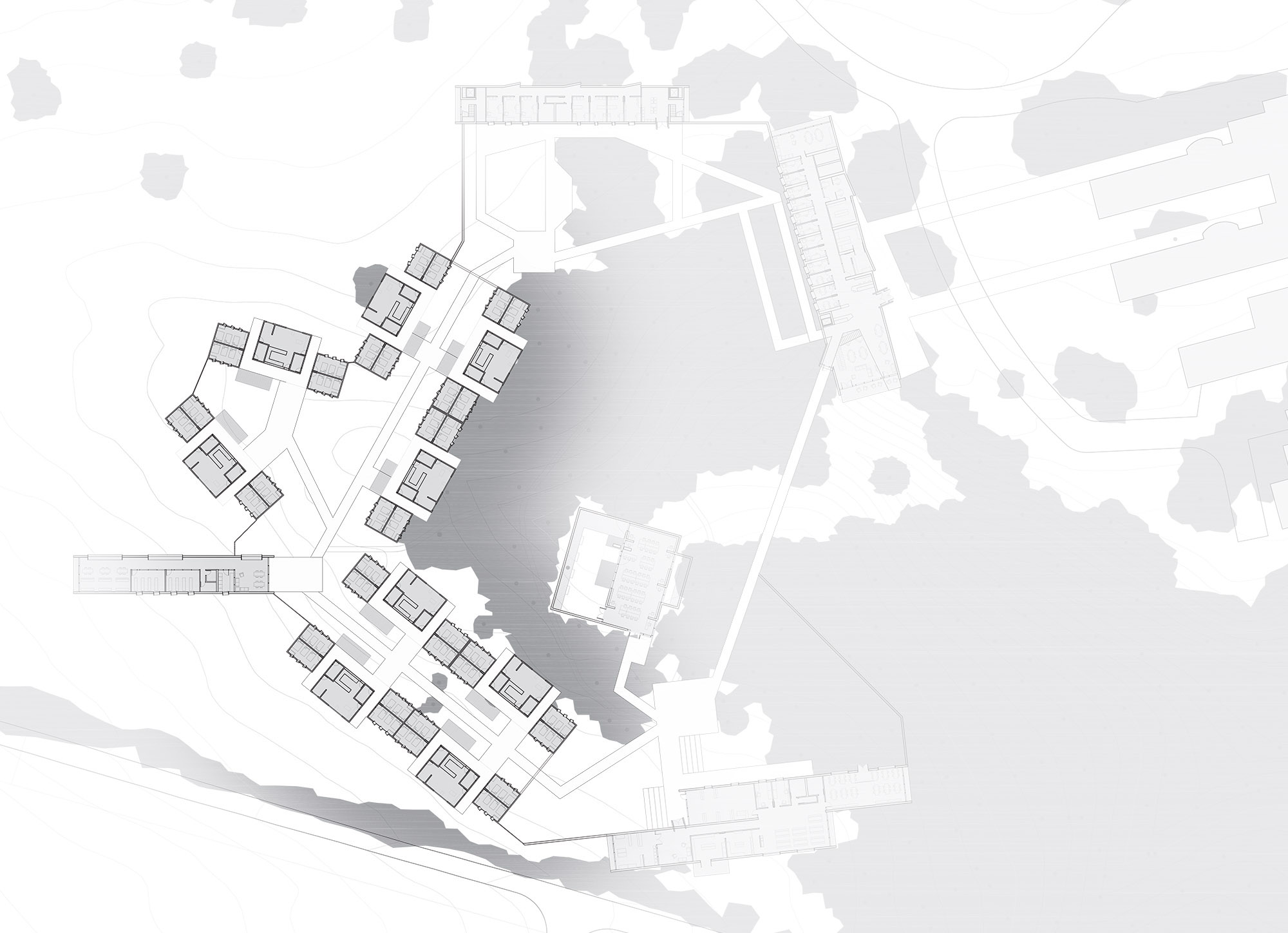
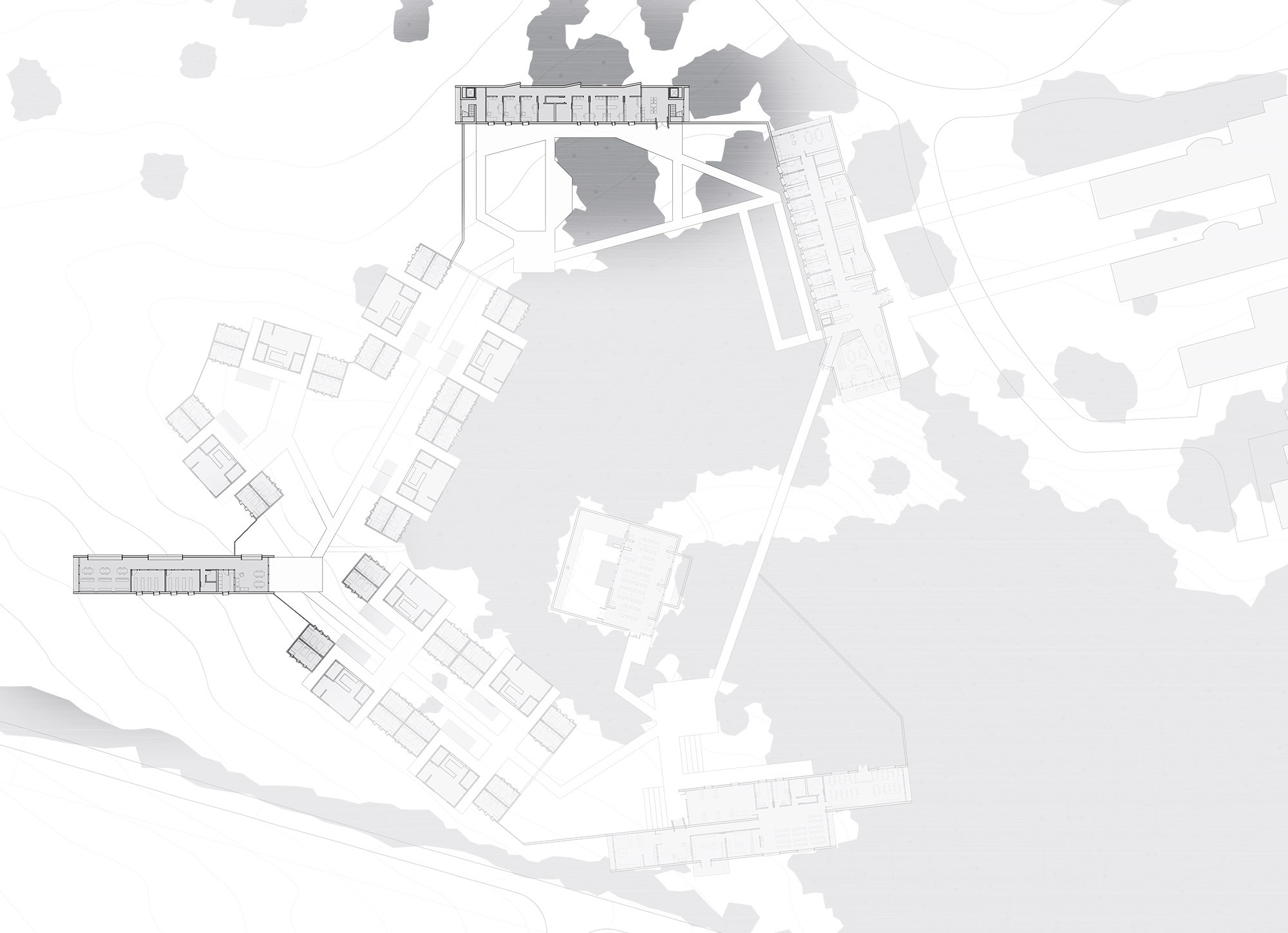
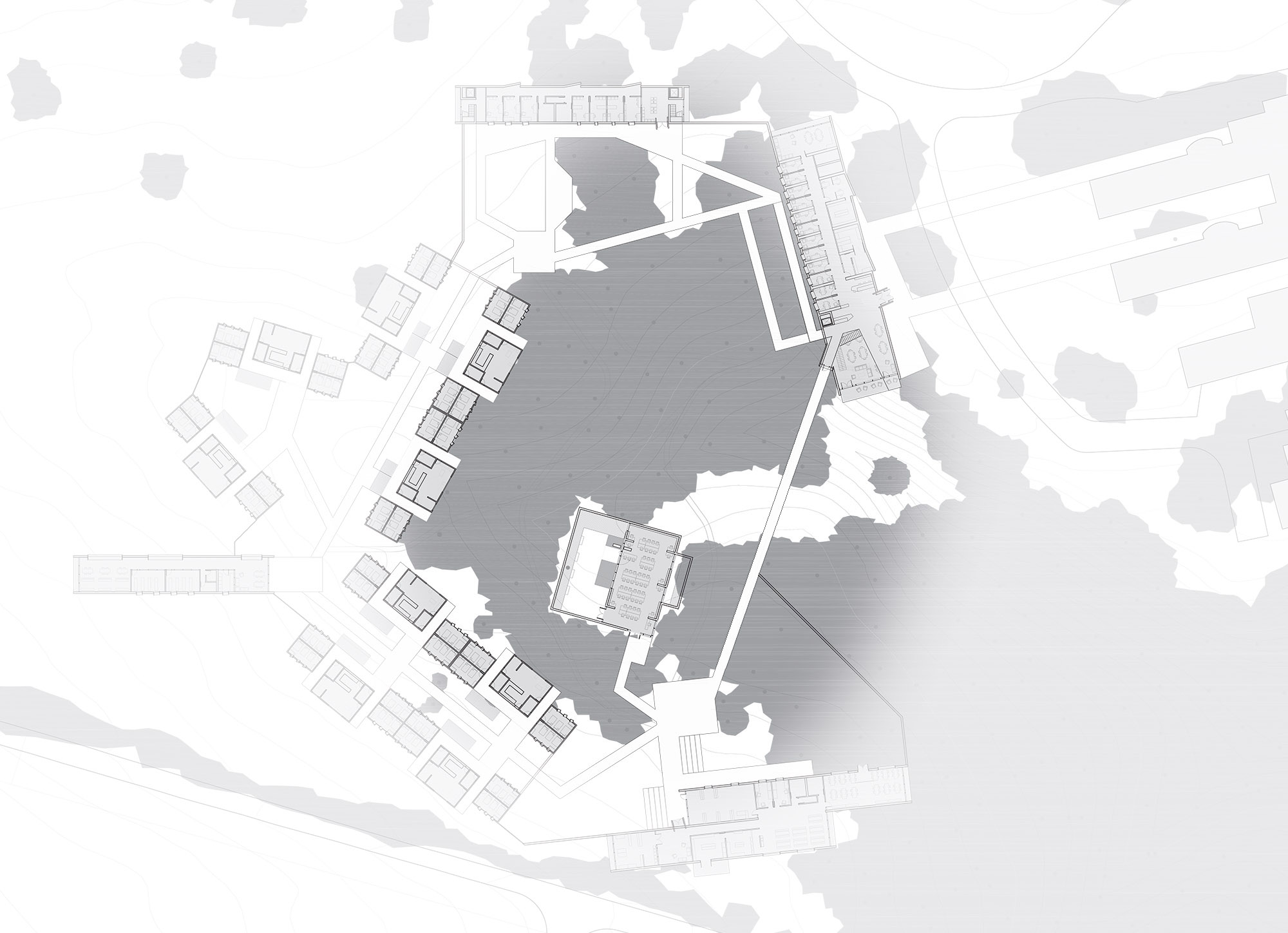
In this network, the Sanctuary for Austin Families (SAF) would serve women and families fleeing unsafe living conditions. Nestled in a forest near an existing family shelter, the inward-facing courtyard design of the campus provides a feeling of protection.
![Exploded_Commons_Linework_PLANS [Converted]-01-01.jpg](https://images.squarespace-cdn.com/content/v1/52ae18c1e4b09af7f3ca9a6a/1552237533763-5TDLDZFZOQFPPHXLLRPY/Exploded_Commons_Linework_PLANS+%5BConverted%5D-01-01.jpg)
COMMONS
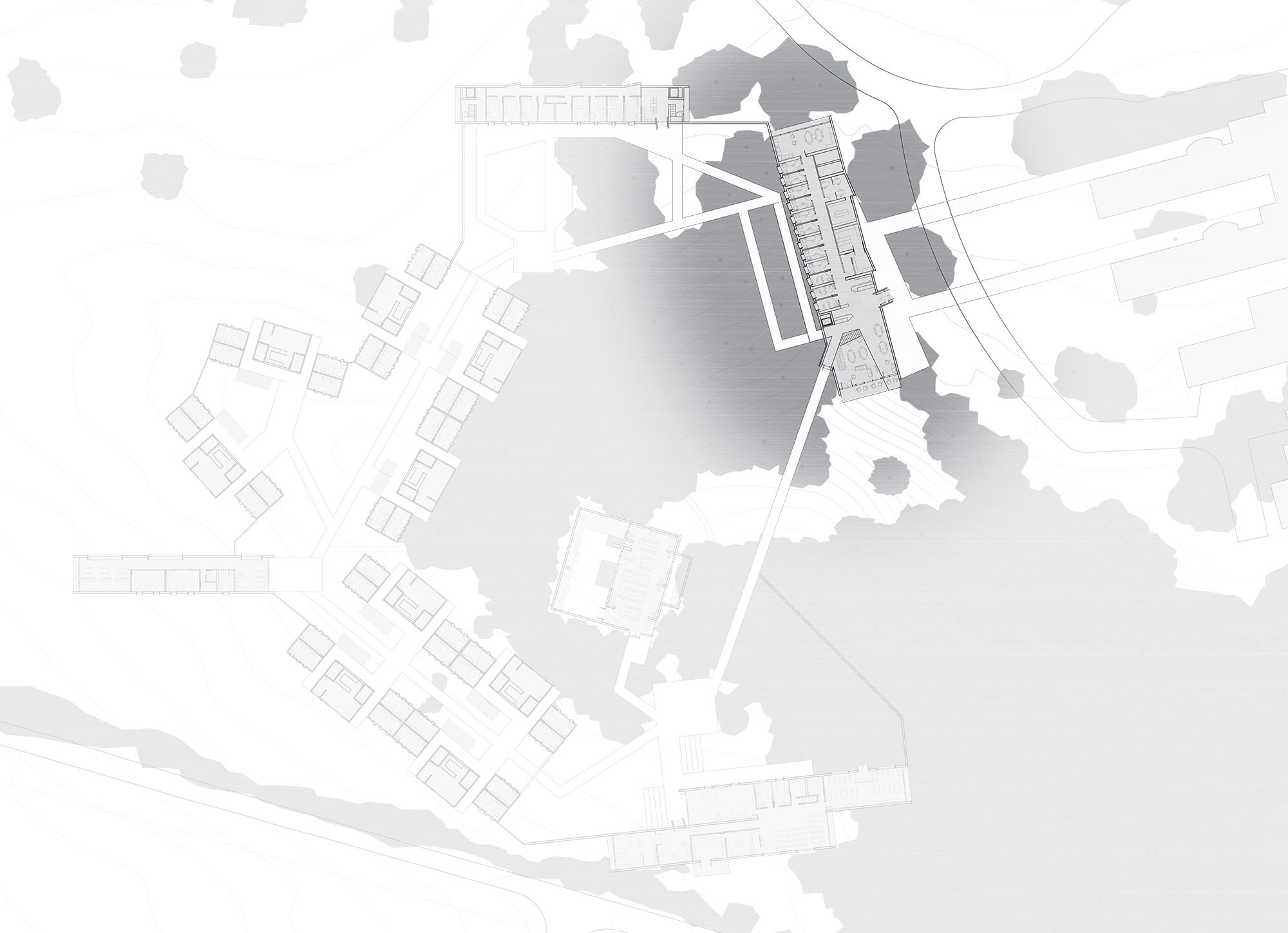
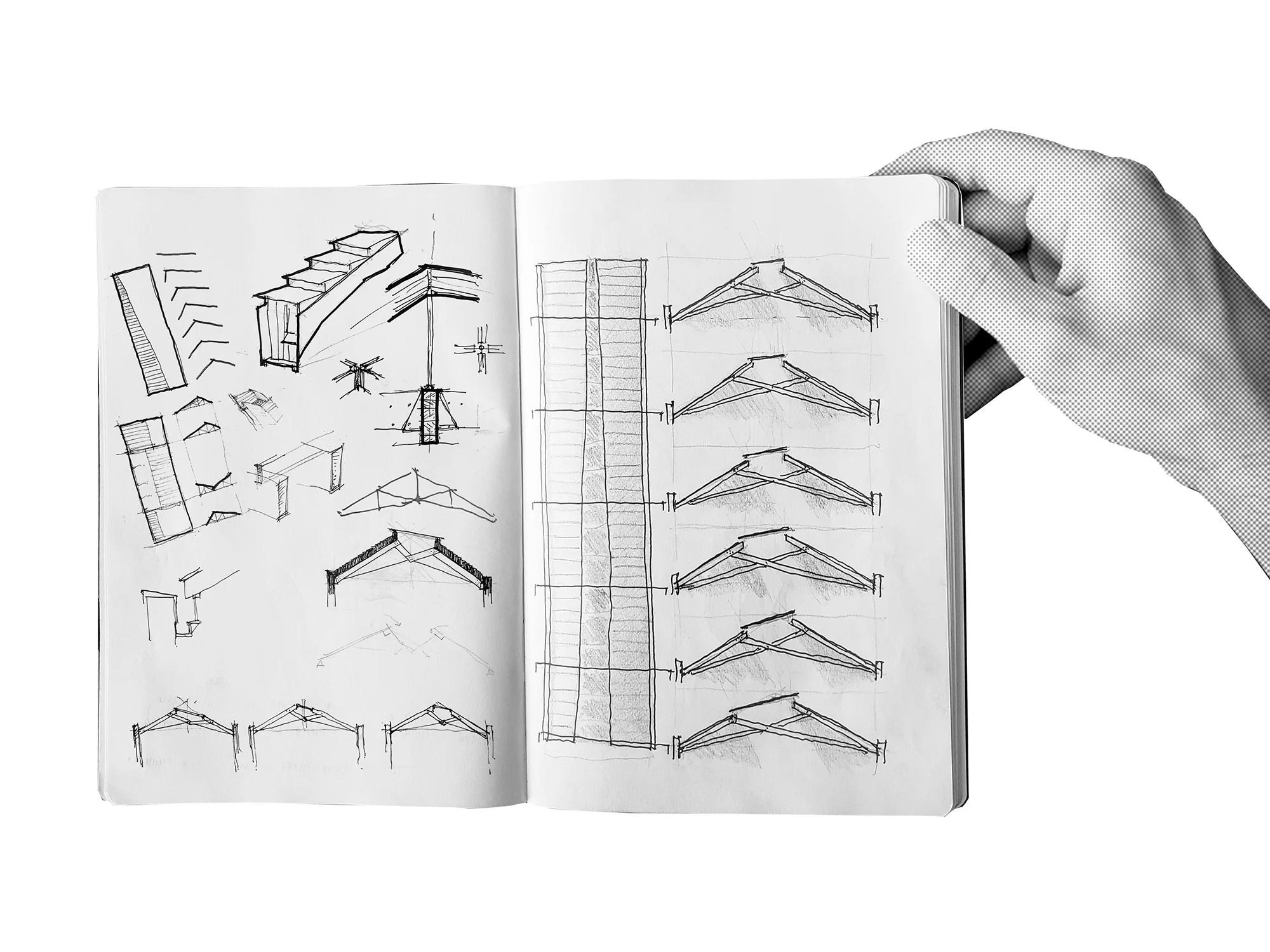
Spaces that contain resident services are housed in elongated concrete buildings with gabled roofs. The form serves as the perimeter wall, emphasizing the feeling of enclosure and protection. Gable roofs hint at a classic house motif, but gently open at their apex to provide natural light. The main building provides access to the bridge, which leads to the residential areas of the site.
![Exploded_Church_linework [Converted]-01.jpg](https://images.squarespace-cdn.com/content/v1/52ae18c1e4b09af7f3ca9a6a/1552237999441-07PUGWSB6K7T72GTX6BS/Exploded_Church_linework+%5BConverted%5D-01.jpg)
CHAPEL / LIBRARY
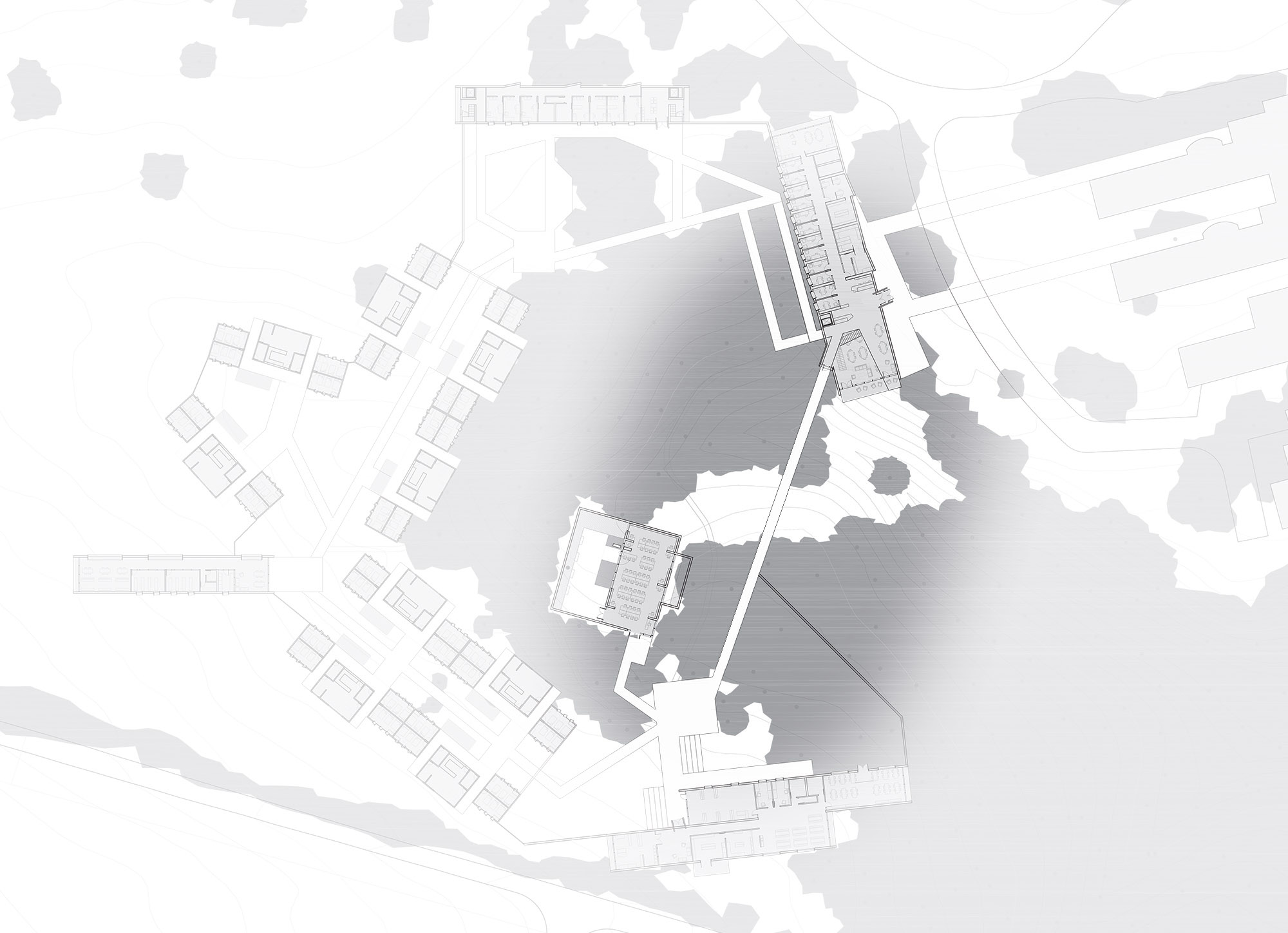
In the center of the campus where the bridge ends, a multi-use building serves as a library and non-denominational spiritual center. Embedded in the forest, a simple grid structure supports vertical steel columns that lift the roof above the entry and altar. An enclosed garden provides a calm, quite place to spend time outside.

VILLAGE
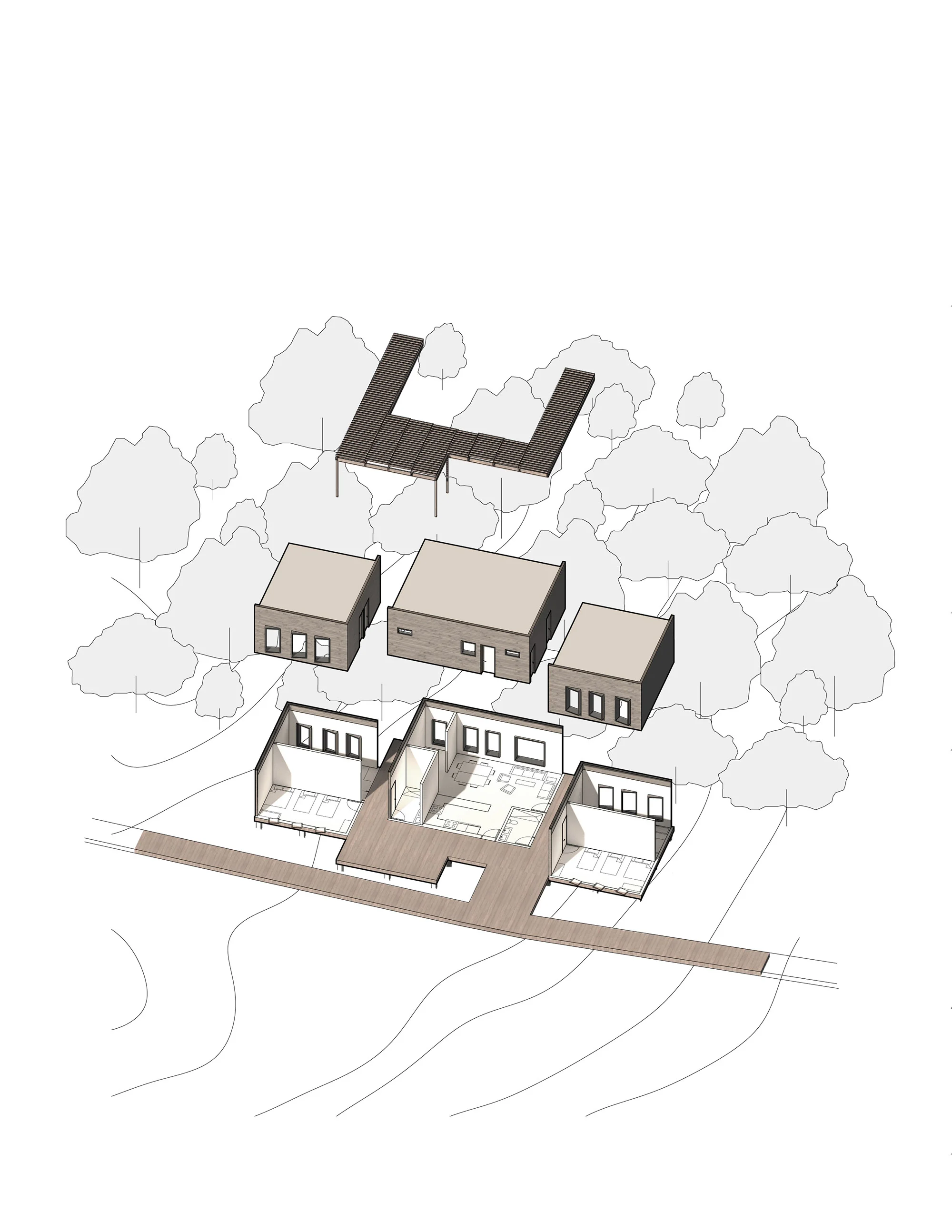
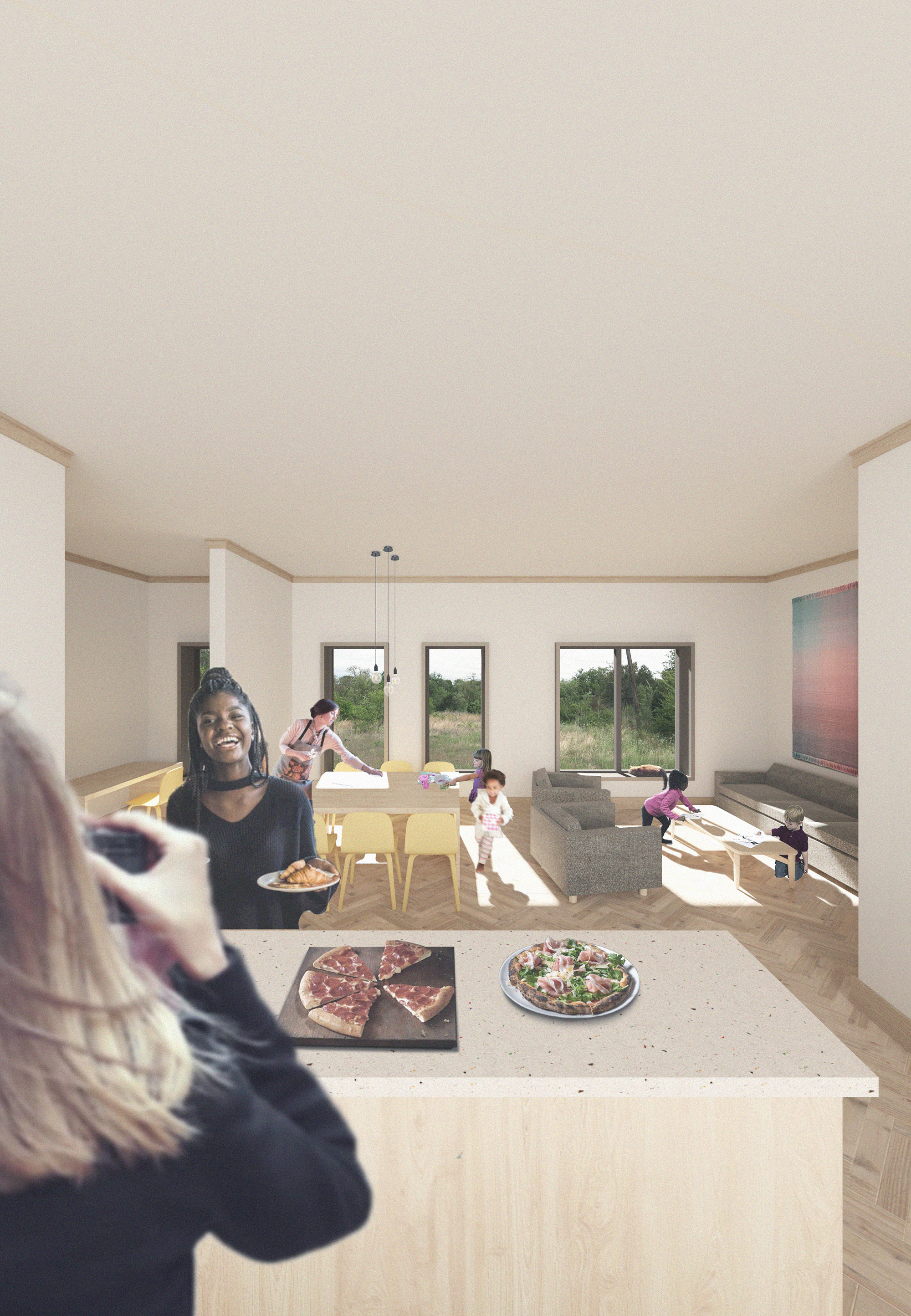
Based on research and interviews with caseworkers, living spaces are designed to provide varying levels of privacy for residents dealing with trauma. Individual rooms are separated from the shared living spaces to emphasize a sense privacy. Shared living rooms provide a space to socialize in a controlled setting with familiar faces. Finally, covered outdoor porches connected to public elevated walkways provide an area to encounter residents from other units. Units are modeled after detached housing typical of Austin to ease the transition back to independent housing.
The main findings of the studio are twofold. First, there is no “one-size-fits-all” approach to homelessness, so shelters need to provide flexible living arrangements and a range of supportive services.
Second, concentrating services in single, large facilities is stressful for both the residents and the communities that support them. With a decentralized system, residents can navigate the traumatic experience of homelessness in smaller, more personal, and more dignifying shelters.